• About

nubiaNomad

~ happenings & reflections

nubiaNomad

Author Archives: nubiaNomad

Better the devil you know

08 Friday Apr 2011

Posted by nubiaNomad in thoughts

≈ 1 Comment

Tags

Sudan

On the heels of popular revolutions that swept desolate regimes out of power in Tunis and then Egypt, Sudanese youth frustrated by the current situation in country tried to follow suit. Despite numerous attempts to organize and stage protests, most groups around the country were met with very violent suppression of their activities and these efforts failed to garner large-scale support. Sudan and the Sudanese people are no strangers to popular revolutions. The will of the people triumphed twice to overthrow dictatorial regimes and put in place governments that are more representative of the people. Two popular revolutions later….. and youth are in the midst of plotting a third. Questions that come to mind is that after 2 successful revolutions, what has the country learned? and why has this third attempt been a relative flop?

From my limited spectrum, it seems to me that the ruling regime took in a lot of lessons, while the people have quickly forgotten. The current regime dutifully did their homework on how best to weaken the opposition. As a result within their reign, organizations that were hotbeds for resistance were quickly dismantled including worker’s unions and academic institutions. This led to a mass exodus of people from the country currently living in the diaspora. Fast forward to today, the government is just as technologically savvy as the opposition. They have cleverly infiltrated social media resistance groups and carefully followed every step of the process. Although this aided in quickly dismantling the physical protests that took place, there are other factors that have led to the breakdown of this movement.

It seems that the primary reason for this lackluster initiative is the lack in numbers. The vast majority of the population is apathetic. Their view is “better the devil you know” after decades of living under the rule of the current government, many are fearful that the next wave of “leaders” will be more brutal and more corrupt. So they would rather have a government they have grown to expect disappointment wrapped in bits and pieces of piecemeal relief (a road here, a hospital there, etc). The political and economic situation of the country is as weak and uncertain as ever, and those who weren’t swayed to join protestors  in the streets would argue that now is not the time….there are too many variables and the average citizens is trying to figure out how to put food on the table with the various austerity measures that have been put in place.  To add to this equation, the current government has a genuinely strong supporters who believe in their “cause”.

What lies ahead for Sudan or the 2 Sudans that will emerge in the coming months, no one can foretell. All one can hope for is that the political leadership has an ounce of pragmatism to steer the nation to more stable grounds.
Share this:

  • Click to email a link to a friend (Opens in new window) Email
  • Click to share on X (Opens in new window) X
  • Click to share on Facebook (Opens in new window) Facebook
  • Click to share on Pinterest (Opens in new window) Pinterest
Like Loading...

Walled City of Harar

29 Tuesday Mar 2011

Posted by nubiaNomad in Travel

≈ 1 Comment

Tags

Ethiopia, Harar, Jugal

Making good on a promise to get out of Addis and explore the rest of Ethiopia, I jumped at the chance to visit the Eastern city of Harar with a few friends. We opted to take the bus because I definitely wasn’t going to entertain the idea of driving 8 hours on a very busy road that eventually leads to the Djiboutian port. The city is unlike any other place in Ethiopia and while trying to navigate its complex network of narrow alleyways, it definitely did not feel like I was in Ethiopia.

 Vodpod videos no longer available.

Harar is a walled city, with 5 main gates that once were closed on a nightly basis to protect the city from invaders. The city is regarded as the 4th most holy city in Islam. It also boasts a whopping 90 mosques within the small radius of 45km2. The old town or Gugul, has a feel of small Maghrib towns with stone homes, brightly painted and very narrow passages. Getting lost and roaming around these passage ways was a highlight of the trip. The first time I stepped into the guesthouse, I was taken aback by the amount of trinkets hanging EVERYWHERE. I thought this was some sort of tourist gimmick, but it turns out this is very much the norm. As the pics in the slide show indicate, it’s customary to hang or display every piece of kitchen ware on the walls and built-in shelfs in the living room area. Decoration meets functionality. It definitely took a minute to take it all in a bit dizzying.

We spent an entire morning fabric shopping and stopping at every cafe for a cup of tea. As shop keepers began to wane off and retreat to their Khat chewing sessions and escape the burning afternoon sun, we took a wonderful siesta and returned to our aimless meandering around the town. As for the tea, amount of sugar used was literally half the small cup it was served it. I thought Sudanese liked their sugar…but Hararis have taken the prize for that one.

We were dragged by a certain someone to go and see the infamous “Hyena man”. An old man who has taken to feeding the hyenas that roam around the city. Ironically, I ended up feeding the disgusting animals, while the person who dragged us there was scared to death to even approach them. I have no idea how this man came across this odd hobby that now probably provides a steady income from various tourists wanting to partake in the experience.

Down side of the trip was the unexpected aggressiveness by young guys around town. We were constantly followed, at time claiming it was for our “safety” or to help us bargain in the market. Constantly trying to ward off these unwanted individuals definitely was a test on our collective patience. Despite these annoyances, the long bus ride and ridiculous amount of customs checks along the ride back, the trip was well worth it and a must see for anyone visiting or living in Ethiopia.

Share this:

  • Click to email a link to a friend (Opens in new window) Email
  • Click to share on X (Opens in new window) X
  • Click to share on Facebook (Opens in new window) Facebook
  • Click to share on Pinterest (Opens in new window) Pinterest
Like Loading...

Off the beaten track: Bale Mountains

10 Thursday Mar 2011

Posted by nubiaNomad in Travel

≈ Leave a comment

Tags

Bale Mountains, Ethiopia, Suf Umar Caves

Talk of a trip to Bale Mountain had circulated for many month but when it came down to it, we managed to put the trip together in a matter of hours and leave the following day. Ethiopia is slowly but surely building up its tourism industry. It has managed to get thousands of foreign tourists on the so called” Heritage trail”, which encompasses several Northern cities starting with Bahir Dar and moving northward to Gonder, Lalibella, Axum, Mekelle to visit various ancient religious sites that are mostly associated with the region’s strong ties to Orthodox Christianity. The other popular route of tourism, is what I like to refer to as the “people watching tour” where visitors are caravaned down to the Omo River region to watch people of various indigenous tribes such as the Hamar, Mursi and Murele tribes to name a few. Although I do my best not to generalize and stereotype, the latter tour generally attracts hoards of westerners wanting to “experience” these traditional lifestyles but in reality can be very invasive with their prodding and bulky SLR cameras and video equipment. I will not dwell on that matter. Nonetheless, Ethiopia has much to offer and Bale Mountains, most notably Suf Umar caves tend to get overlooked in terms of tourist destinations. Great news for us, but a shame for the many that comes to visit and never take the opportunity to explore these amazing caves.

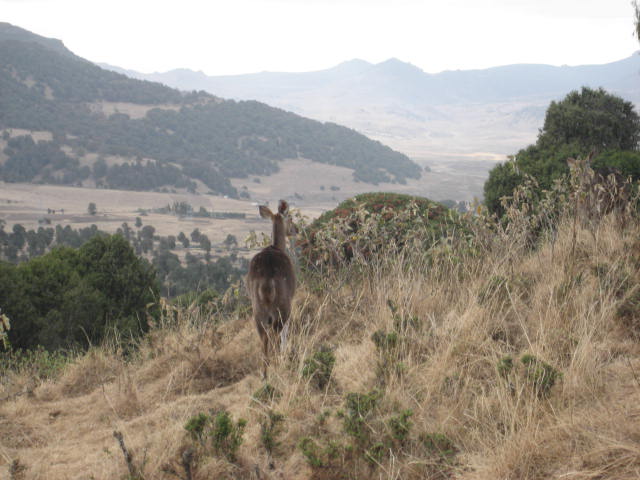
The first day of the trip we rode off from Addis en route to Dinsho, the base camp for Bale Mountains National Park. En route we drove via Shashamane and stopped by the town of Dodola to pick up a local guide from the Dodola Tour Guides association (the story about this guide deserves its own post, keep a look out for it). Arriving in Dinsho late afternoon, we took advantage of the remaining day light and trekked through the park and saw an array of animal in the process. Impressive Nyalas , Ethiopian Wolves and numerous birds to name a few. The chilly weather was worthy of a nice warm fire and given the lack of electricity in our basic lodge, we had plenty of time to star gaze. In all honesty I have never seen a sky so littered with stars in my life; simply phenomenal. Standing in the cold, necks tilted to the heaven for hours was unexpectedly very enjoyable. It was captivating.

The following morning after a stop for breakfast in the town of Robe we drove to Suf Umar. Given that Saturday is a market day we also weaved through the masses of people, donkeys, cows, goats and camels making their way to the Suf Umar market. The trip to the cave was definitely worth the long drive, 200 km of which was on a dirt road. These are the second largest caves of their kind in the world, with many paths still undiscovered. Cave exploring and crossing many rivers and streams that converge within the darkness of these spaces was an indescribable experience. At times while trying to traverse the river within the cave, we had to wade in rapids that were waist deep and hold on to the edge for fear of being swept away by the currents. During the several hours of exploration we also got to hear stories of local folktales surrounding the naming of this cave and infamous Suf Umar.

After several hours of trekking within narrow passage ways and pitch black darkness with thousands of bats, we headed out of the cave and chilled by the river. In was perfect weather, and the water was refreshingly cold. Clearly we were not the only ones with this bright idea as it seemed to be the local swimming hangout, laundry facility and animal watering hole. Several hours more were spent wading in the river and lounging on large rocks near by, which made for a very relaxed ending to a very adventurous day.

Share this:

  • Click to email a link to a friend (Opens in new window) Email
  • Click to share on X (Opens in new window) X
  • Click to share on Facebook (Opens in new window) Facebook
  • Click to share on Pinterest (Opens in new window) Pinterest
Like Loading...

Agra

01 Tuesday Mar 2011

Posted by nubiaNomad in Travel

≈ 2 Comments

Tags

Agra, India, Taj Mahal

I couldn’t come this far and not get the chance to visit the magnificent Taj Mahal. Many in our group believed that it was a grand mosque and were surprised to find out that this was built by the great Mughal ruler Akbar to honor his wife Mumtaz. She must have been something to have such a monument constructed in her honour. It was beyond expectations.

The trip from Delhi to Agra was nauseating. The swerving cars, the constant use of car horns drove me to the brink of insanity. These drivers seem to have their hands permanently attached to their horns. Never really understood the bickering mechanism between various drivers conveyed through the excessive usage of car  obnoxious sounds. Nonetheless that was not going to put a damper on my chance to see the Taj Mahal.

Upon Arriving at Agra after a 4 hour drive, we rushed in to get our tickets and head over to this great monument. From the boundaries of the city to the ticketing booth, it took more than an hour battling cars, carts, cows and anything on 2-4 legs/wheels.

Vodpod videos no longer available. 

Walking past the grander than life gates, one of 3 that surround the mausoleum, it was hard not to think about the effort was exerted in building this structure; without any modern machinery. The structure is impeccable. I shall let the pictures speak for themselves in this one because nothing I could possibly write can do it justice.

Share this:

  • Click to email a link to a friend (Opens in new window) Email
  • Click to share on X (Opens in new window) X
  • Click to share on Facebook (Opens in new window) Facebook
  • Click to share on Pinterest (Opens in new window) Pinterest
Like Loading...

Himalayan Foothills

28 Monday Feb 2011

Posted by nubiaNomad in Travel

≈ Leave a comment

Tags

Augustamuni, Dehradun, Himalayas, India, Jaunsar, Uttrakhand

From Delhi we took a night train up north to the state of Uttrakhand’s capital, Dehradun. The 270 km journey took us the entire night. The sleeper train was an interesting experience with a flurry of passengers trying to ram their bags safely underneath their beds. The platform at Delhi’s train station was packed with passengers awaiting their respective trains. There was literally no place to stand let alone sit. We awoke the next morning in chilly Dehradun.

Vodpod videos no longer available.

 From Dehradun several hundred kilometer journey awaited us to the Himalayas or the Himalayan foothills. As we began to traverse the tightly wound roads that curved around the mountain peaks, it baffled me that these mountains were referred to as hills. At the peak of our journey we reached locations with altitudes surpassing 4000 ft above sea level. I suppose when your base of comparison is Everest and K2 these are just merely foothills.

 At times I felt queasy looking out of the car window to realize if the driver veered mere centimeters to the one side we would go flying off the edge of the cliff. The further upwards we traversed the chillier it got and from a distance the distinctive snow-capped peaks of the Himalayas came to view. Along the way we passed many hill towns and villages and I am still awestruck by how these homes are constructed in such environments. From a distance once could see small hamlets literally clutching the side of the mountains, at it appeared as if houses are piled on top of each other. occasionally we would pass the odd valley or flat region amongst the mountains. Given the harsh environment, people residing here have had to become extremely resourceful over the centuries. Many have very deep ties to their ancestral homes and would never think of relocating to the “plains”. These valleys were extremely well-organized to maximize benefits and turn the odd patch of land into profitable enterprise from various cash crops.

Among the many communities that we encountered the most interesting was probably the Jaunsari tribe. Traditionally this community practiced polyandry (1 wife, many husbands). The woman usually married all brothers in one family. When I inquired as to why that was, I was told so that the family wealth will not be split up. Today very few villages of this tribe practice this custom.

In general the “hills” people put us to shame with their hospitality. Their kindness is indescribable. A flood of strangers we were to them but they welcomed us with open arms. Despite the language barriers and the use of sign language, I felt very comfortable in their presence. Without a doubt all the communities we visited along our week-long stay in the region were far more hospitable than any we had met to date. I came to find out that the “hills” people are generally fearful and mistrustful of the “plains” people living in the rest of India. Despite the tribal differences in various foothills communities, there seemed to be a thread of commonality between them.

Another remarkable stop along the journey in this region was the chance to visit the great Lakshman temple. This state in particular is home to some of the holiest sites in the Hindu religion. Millions of pilgrims trek to these remote parts and even further into Tibet on an annual basis. At the Lakshmani temple where at the end of the journey, pilgrims shave their heads and bathe in the Ganga River. It was inspiring to see a sight of such intense devotion.

Overall we covered hundreds of kilometers around narrow, landslide prone roads and shared experiences with some of the warmest people I have come across. In every community somehow I was dragged into some form of dance. I followed the moves of the crowd and carried on as best I can. We travelled to the borders of the Tibetan border, which was also quiet the experience.  This by far was the most rewarding aspect of the trip. Memories that will forever be etched in my mind of continuously smiling faces; outbursts of laughter at our mutual use of sign language to communicate and happiness about this shared experience.

Share this:

  • Click to email a link to a friend (Opens in new window) Email
  • Click to share on X (Opens in new window) X
  • Click to share on Facebook (Opens in new window) Facebook
  • Click to share on Pinterest (Opens in new window) Pinterest
Like Loading...

Delhi in a flash

24 Thursday Feb 2011

Posted by nubiaNomad in Travel

≈ Leave a comment

Tags

Delhi, India

After several days in the southern Indian state of Karnataka, I headed up north to the nation’s capital en route to the Himalayan foothills. Luckily it was a Sunday and the infamous Delhi traffic was a bit more bearable. The city has been given a fresh new “wash” if any of you remember the debacle that surrounded the preparations leading up to the Commonwealth Games that took place in 2010. Streets are freshly painted; bright new road signs in 4 languages (Hindi, English,Urdu and Punjabi) adorn the streets; greenery is finely manicured and;  the infamous cycle rickshaws, which for me are synonymous with India were conspicuously absent from areas surrounding major tourist destinations. This reality of Delhi was a far cry from what I had imagined.

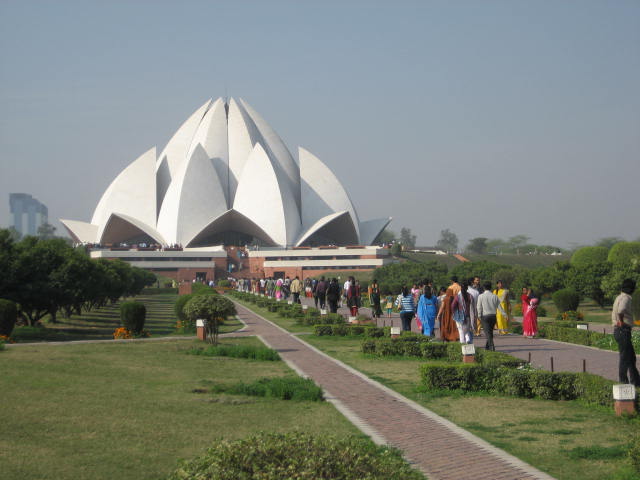
Trying to make most of our day in Delhi we began early by hitting up the major tourist destinations. Took sometime to soak in the tranquility of the gardens at the Bahai Lotus Temple, after which we zipped across town and walked around the infamous Red Fort. From there we visited various other parks in the city and of course I couldn’t leave without seeing the magnificent Humayun’s Tomb. After which many of the group members wanted to get some shopping done. So we headed off to discover some of Delhi’s famous street market.

After escaping the tourist hotspots and veering into some of the markets, I began to see through the veneer of New Delhi. Through the cracks one could see old Dilli, the city whose boundaries were once confined to the perimeters of the Red Fort; the Dilli that smelt of sweat, spices and sandalwood… and the occasional wafts of stagnant water. This Dilli was far more colorful, one where chaiwallas (tea boys/men) artfully balance giant thermos on one hand and many cups on the other….serving delicious chai masala (spiced tea with milk). From various food vendors around the streets, steam rose swiftly to join the smog created by autorickshaws, motorcycles and cars. navigation through the streets is a skill that must be mastered, not only must you dodge bi,tri and quadrupedal vehicles, you have to worry about the occasional cow or herd of cows. It is here that I discovered my favorite street food….vegetarian momos, which are essentially similar to chinese wontons (steamed dumplings).

After an eventful afternoon traversing through local markets, we headed to a shopping center is the district of Guragon (technically part of neibouring Haryana State). The spotless, air-conditioned complexes were akin to massive American style shopping centers. Most of the stores were American or European global brands. The appearance of most shoppers was a stark change from what I had seen earlier in the markets. The distinct kurtas and patiyallas (long cotton shirts and loose pants) were oddly missing. Most shoppers with perfectly coiffed straight hair, marched through the malls in jeans and “western” style clothing. As I eavesdropped on various conversations although the majority were Indian, English was always used as a means of communication. The sight of a ladies trying to juggle numerous shopping bags, a purse, while simultaneously talking on a cell phone or vigorously pounding away at a blackberry was common. It is here that I realized the start difference between Delhi and Dilli. I got the sense that a large swatch of the upwardly mobile population now see traditional customs as somehow backwards or constraining and the push towards “western” way of living is somehow more liberating.

All in all it was a great experience visiting the nation’s capital and home the seat of parliment of  the “world’s largest democracy.” That phrase was echoed in several conversations I had with various people throughout my stay.

Share this:

  • Click to email a link to a friend (Opens in new window) Email
  • Click to share on X (Opens in new window) X
  • Click to share on Facebook (Opens in new window) Facebook
  • Click to share on Pinterest (Opens in new window) Pinterest
Like Loading...

Karnataka

22 Tuesday Feb 2011

Posted by nubiaNomad in Travel

≈ Leave a comment

Tags

Bangalore, Karnataka

Just got back from a several week trip to various parts of India, which I am still trying to process. On the whole it was a great trip. From Mumbai we took a direct internal flight to Bangalore International Airport. From the glossy finish and the highly digitalized adverts, it was evident that we  had reached India’s tech hub. The city, which is home to many technology firms is exploding with new urban development projects. Everywhere you look high-rise complexes are taking shape. Demand for housing in this town is immense and there is no shortage of suppliers….but sadly space is quickly dwindling. A city which was once known for its green space and balance of urban greenery has now lost that charm.

Vodpod videos no longer available.

Bengaluru has finally reclaimed its old name. The British finding it difficult to pronounce Bengaluru dubbed it Bangalore. It is slowly trying to shed this old name.

At all hours of the day one could see hoards of young professionals zipping in and out of these tech company “campuses”. The spaces they occupy are so large they can really be viewed as campuses. These impeccably dressed employees, usually touting some sort of hand-held gadget (blackberry and iPhones seem to be the most popular) walk around with their company badges even when they have left their work premises. These are most likely staff the occupy the customer care centers that one calls from around the world. I could not help but remember my last encounter when I was at my wit’s end trying to set up a wireless router and had to call customer support services. I was greeted by a technician by the name of “Victor” who in reality is probably Vijay but has changed his name for the purposes of facilitating name pronunciation for a North American audience.

On the culinary side, traveling across Southern India was an absolute pleasure. I don’t think I had one mediocre meal throughout my stay in Karnataka. Delicious, spicy south Indian food was mouth-watering. Thalis, which is a try of assorted dishes served with rice or Idli, you could never go wrong because there was so much to choose from. Oh and the crisp dosas served with every meal…getting hungry just thinking about it.

Although Bengaluru was home base, most of the time was spent visiting various areas around the state of Karnataka. The difference between the highly urbanized Bengaluru and the rural regions surrounding was night and day. Communities outside this tech hub mostly subsides on agriculture and agroprocessing and spending time in rural villages across the state was a real pleasure.

Share this:

  • Click to email a link to a friend (Opens in new window) Email
  • Click to share on X (Opens in new window) X
  • Click to share on Facebook (Opens in new window) Facebook
  • Click to share on Pinterest (Opens in new window) Pinterest
Like Loading...

Sparks have ignited a flame in Sudan…

30 Sunday Jan 2011

Posted by nubiaNomad in thoughts

≈ Leave a comment

Tags

protests, student demonstrations, Sudan

A strong wave of student-led anti-government sentiments began to reverberate through facebook throughout the past few days as Sudanese youth mobilized their peers in participating in demonstrations against the current government. Given the recent events in Tunisia and then Egypt and Yemen, young Sudanese across the country and abroad called for peaceful protests on Jan 30. Prior to the planned protests, roughly 12,000 people confirmed their participation. The official website stated:

The people of Sudan will not remain silent anymore, It is about time we demand our rights and take what’s ours in a peaceful demonstration that will not involve any acts of sabotage, We will demonstrate against the rising of the prices, the corruption, unemployment and all false practices of the government such as violence against women and lashing them in ways that breaks all laws of religions and humanity and the violation of minorities rights.
It is about time we use our god given voice to demonstrate against an injustice government that is willing to sacrifice its people and its land to remain on the higher power.
it is about time we show what we’re really made of, it is about time we restore or lost honor, it is about time we fight for our god given rights.
our brothers in Tunisia did it and so did our brothers in Egypt.
It is about time for us.

* picture from Aljazeera

The pro-government newspapers were quick to denounce this “charade”. Prior to the planned protests several anti-government activists were detained and late last night cars were stopped and searched by police forces.

Early on today reports indicated that several student demonstrators were arrested. As the size of the demonstrations grew, police stepped up the violence, including the use of teargas to disband the protests. Videos of protestors were posted on youtube. Despite a respectable number of protestors, it is still unclear the impact these demonstrations had on the destabilizing the current regime.  Organizers seem persistent and are calling for similar protests tomorrow afternoon. In addition to the protests that took place in Khartoum, students across other cities such as ElObied stormed the central markets.

I hope that these demonstrations send a strong message to those in government. The Sudanese people have overthrown 2 previous regimes through popular uprisings. Although this government has done its very best to silence unions, universities and all institutions that have previously spoke on behalf of the people. Growing frustration among many Sudanese, could be a  catalyst to reignite the fervor that has always been in Sudanese blood to stand up for their rights….to speak up and for their voices to be heard.

Share this:

  • Click to email a link to a friend (Opens in new window) Email
  • Click to share on X (Opens in new window) X
  • Click to share on Facebook (Opens in new window) Facebook
  • Click to share on Pinterest (Opens in new window) Pinterest
Like Loading...

It’s snowballing….

25 Tuesday Jan 2011

Posted by nubiaNomad in thoughts

≈ Leave a comment

Tags

Egypt, revolts, revolutions, Sudan, Tunisia

On the heels of intense riots that have ousted Tunisian President Ben Ali, Egpytians organized a series of protests/demonstrations across various cities in Egypt to denounce President Mubarak. The riots have taken a very violent turn with rioters and police forces clashing and many arrests. Below is some of the colorful slogans being used:

قوم يا جرجس قول يا يونس.. بكره مصر تحصل تونس
ثورة ثورة حتي النصر.. ثورة في تونس وكمان مصر
قوم يا زين قول لمبارك.. السعودية في إنتظارك

rough translation:

Get up Gergis, Get up Tunis.. Tomorrow Egypt will follow Tunis
Revolution, revolution until victory.. Revolution in Tunis and also in Egypt
Get up Zein and say to Mubarak….Saudia Arabia is awaiting

Share this:

  • Click to email a link to a friend (Opens in new window) Email
  • Click to share on X (Opens in new window) X
  • Click to share on Facebook (Opens in new window) Facebook
  • Click to share on Pinterest (Opens in new window) Pinterest
Like Loading...

Unity vs. Secession: thoughts on the Sudanese Referendum

25 Tuesday Jan 2011

Posted by nubiaNomad in Sudan, thoughts

≈ Leave a comment

Tags

Referendum, Sudan

Over the past few months I have been continuously asked about my impressions of the Southern Sudan Referendum. As the days drew near and the week-long voting ended the questions changed to what are my thoughts of eminent division of Sudan. Preliminary results show overwhelming support for secession, which comes as no surprise. I can’t say I didn’t see it coming. It was evident many years prior to this vital decision point. Frankly I am a bit aghast by those who are grieving the eminent division of the country. Honestly the notion of unity crashed, burned and died along with the late Dr. John Garang. The late Southern Sudanese SPLM leader was probably the only one with a visionary view of united Sudan. To many in power it was $$$ that dictated their decisions, both North and South. In focusing only on the last 5 years post the signing of the Comprehensive Peace Agreement it is evident Northern powers that be failed to make unity a viable option for the South and Southerners failed to adequately engage with a government that was half heartedly (if that) supporting their cause.

For me secession is a decision that I have easily come to accept and for the most part many young Sudanese of my generation probably share the same sentiments. The decision to secede in the South is unanimous. For those in the North,some  sympathize with the Southern cause and can understand their desire for self-determination after decades of neglect. Others are tired of constantly hearing blames from the South that it was the North/ Northerners who kept them down, given that Southern Sudan has its own myriad of internal regional issues. It was easy for most Southerners to unite against one common enemy “Northern Sudanese government”. It those who are part of an older era from the North who are lamenting this event. To them their identity is somehow intertwined in Sudan that is known as the largest country in Africa, in a Sudan that represents more 500 ethnic groups and over 200 dialects.

In looking ahead, Southern Sudan faces tremendous hurdles to self governance. The region is desperately in need of development. Many in power today were part of the decades-long civil war, making the transition from war to politics can be a challenge. There are too many external influences and too many internal problems between various tribal groups that can destabilize the process of formulating a new nation. The North isn’t in the greatest shape either, standing to lose more than 80% of its oil revenues it has embarked on various austerity measures, which have sparked tensions and riots, well before the Tunisian revolution hit the airwaves. The events that unfolded in Tunis served as a stark reminder to Northern Sudanese governing powers of their precarious position and unstable foundation, that has made them fairly weary. With secession, we stand to see 2 very weak and fragile states that have a very tough uphill battle. The hope is that the oil, which is seen as a “black curse” in many African nations, could be the cure to insuring stability in the region. Both the North and South are starting to realize regardless of the outcome of this secession, they are economically intertwined and need to maintain cordial relations in order to sustain their economies.

Share this:

  • Click to email a link to a friend (Opens in new window) Email
  • Click to share on X (Opens in new window) X
  • Click to share on Facebook (Opens in new window) Facebook
  • Click to share on Pinterest (Opens in new window) Pinterest
Like Loading...
← Older posts
Newer posts →

Enter your email address to follow this blog and receive notifications of new posts by email.

Join 21 other subscribers

Top Posts

zanzibar
Marrakech Fresh: a snapshot of merriment and matrimony
Ecuador: trekking Paseo del Condor
Growth and Evolution of Thought
Water an afterthought in dash to cash in on Ethiopian markets

Archives

Tags

Addis Ababa Agra Al Shamalia Argentina art Atbara River Augustamuni Bale Mountains Bariloche blogging Brazil Buenos Aires Chile culture Cuzco Danang Dehradun Delhi desert Egypt Eid El Bolsòn El Dalanj El Obied El Tayeb Salih Ethiopia food Gadarif glaciers Hanoi Harar hiking Himalayas ICC India Jaunsar Kadugli Kassala khartoum Lago Puelo Lapa London Manchu Picchu media Mendoza nomads Northern State North Kordofan Nubian Peru politics recycling Rio de Janiero River Nile State Ruta 40 Sacred Valley Sayid Hassan Mosque seperation Sikot souq South America South Sudan Sudan Taj Mahal thoughts trash travel trekking tribes Uruguay Uttrakhand Vietnam water water resources work

Create a website or blog at WordPress.com

Privacy & Cookies: This site uses cookies. By continuing to use this website, you agree to their use.
To find out more, including how to control cookies, see here: Cookie Policy
  • Subscribe Subscribed
    • nubiaNomad
    • Already have a WordPress.com account? Log in now.
    • nubiaNomad
    • Subscribe Subscribed
    • Sign up
    • Log in
    • Report this content
    • View site in Reader
    • Manage subscriptions
    • Collapse this bar
 

Loading Comments...
 

    %d